The impact of race on children’s career aspirations is undeniable. Those of us in positions to plan career days, guest speaker visits, and mentoring networks must be mindful of this. While white role models bring valuable perspectives, especially in terms of economic diversity, we must also ensure that we are inclusive of Black role models and other people of color.
It’s not just about participation; it’s about thoughtful engagement and advocacy. We must acknowledge racial differences and work towards creating spaces that are co-designed with, and supportive of, Black professionals and other underrepresented groups. This is essential because representation in career role models is a powerful force in shaping young minds.
In addition to individual role models, when assembling grant proposals for career initiatives, it is imperative to prioritize and amplify Black-led organizations. This strategic inclusion can have a profound impact on the effectiveness and reach of these programs.
In my two decades of experience in technology, education, and economic development, the need to vocalize and reiterate the importance of racial diversity in role modeling remains strong.
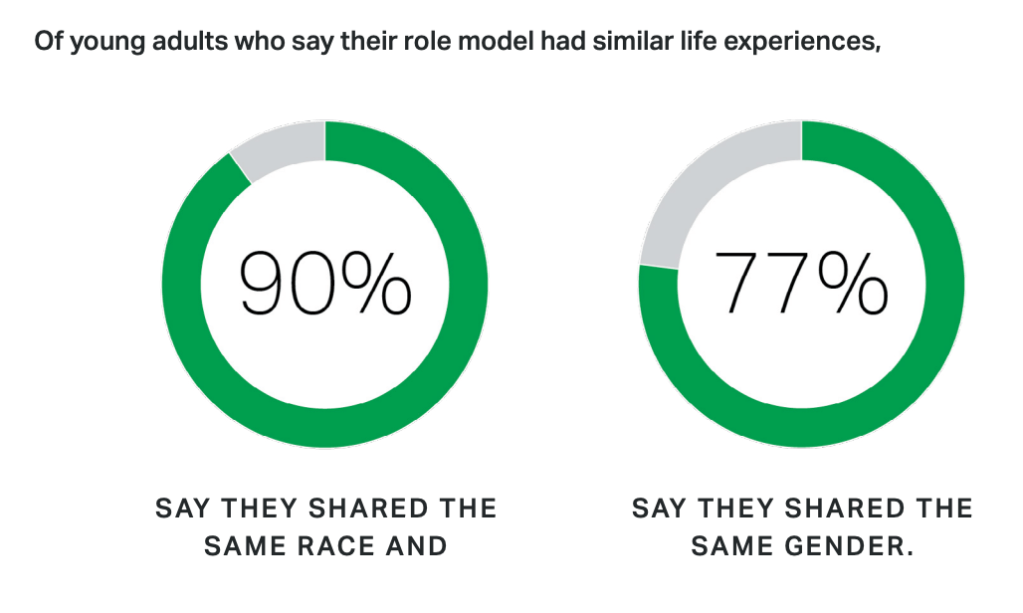
Amazon and Gallup’s 2022 report “Role Models Matter: How Role Models Influence Career Awareness and Attainment” underscores the significance of relatable role models. Students benefit immensely from connecting with role models who share similar life experiences, including race and gender. These connections can foster self-belief and a sense of belonging, which are critical components of career development.
By ensuring that guest speakers and role models reflect the diversity of our society, we not only enrich the experiences of the children they inspire but also contribute to a more inclusive and equitable future.
Let’s take this knowledge and transform our role model programs into beacons of diversity and inspiration for all children.
 TUNING Design Co.