https://www.movewhenthespiritsaysmove.com/
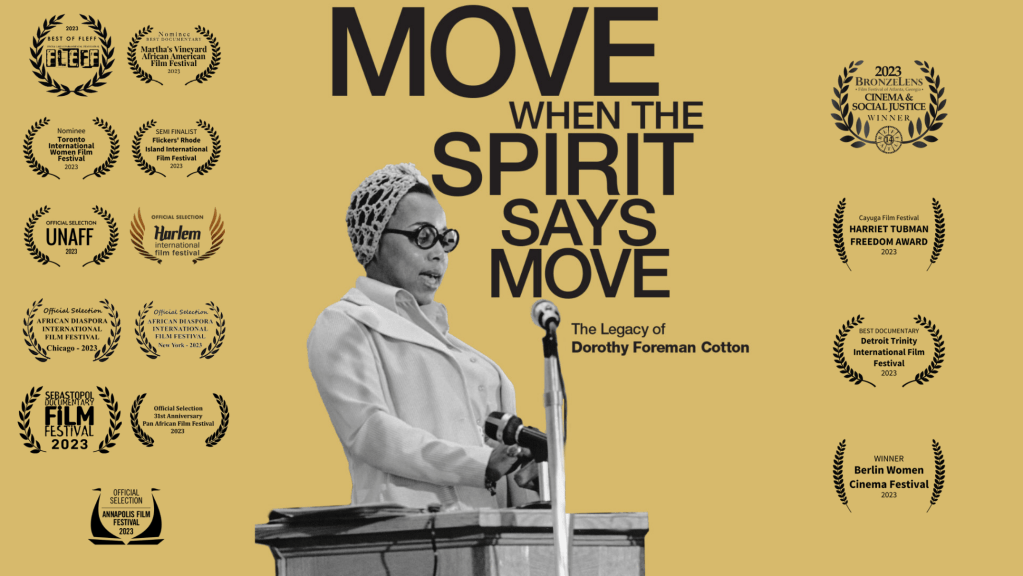
Last night I went to see a screening of a locally made film about civil rights leader and local hero, Dorothy Foreman Cotton. Dorothy was “a member of the inner circle of… the Southern Christian Leadership Conference (SCLC). As the SCLC’s Educational Director, she was arguably the highest ranked female member of the organization.”
At the beginning of the screening, Board President of Southside Community Center, Dr. Nia Nunn, handed out index cards and pens and asked us to consider three questions while watching the film:
WHAT? What did you learn?
SO WHAT? Why does it matter?
NOW WHAT? What will you do with what you learned?
WHAT? What did you learn?
I was struck by a moment early in the film when someone was describing Dorothy’s methodology when she traveled from city to city and gathered folks. ‘She didn’t tell you what to do. She asked questions. And she let people connect with one another.’ This is of course what Dr. Nunn was doing, too. This mode of education is so powerful. It makes the assumption that communities have the answers to the complex problems we face. So when we gather folks, we can draw out and shine a light on community wisdom.
SO WHAT? Why does it matter?
There was another part in the film early on when someone said, ‘We’d go from city to city and look for the PhD types. They are in every community. They know what’s going on and why and who is connected to what.’ These aren’t people with degrees per se, but people with deep local insight. They are everywhere. They are so valuable.
NOW WHAT? What will you do with what you learned?
Inspired by this film, Dr. Nunn’s writing exercise, and also Jess Brown’s research, I will continue to look for the bright spots in communities and hold space for asking questions and connecting. Connecting through conversation but also through creative expression. Dorothy was an educator, but also a singer, an artist. That combination — education + inquiry + art — is more powerful than we recognize.
Let’s go.
 TUNING Design Co.